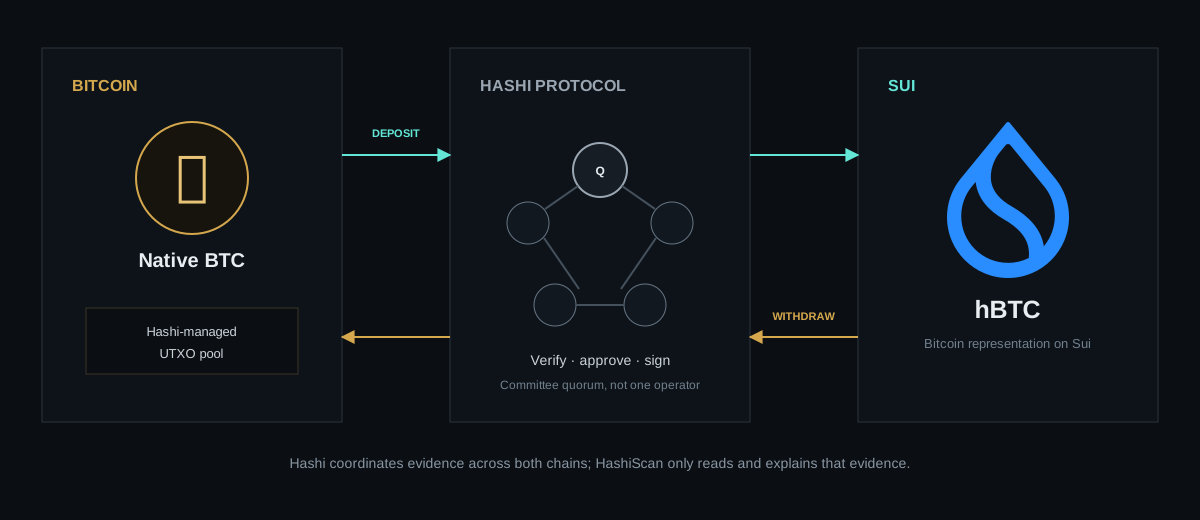
Hashi lets BTC held on Bitcoin be represented as hBTC on Sui. It coordinates Bitcoin transactions, a validator committee, a Guardian, and Sui smart contracts. HashiScan does not move funds—it reads the evidence those systems produce and explains the current step.
Test networks only. The current deployment uses Bitcoin Signet and Sui Testnet. It is not ready for real BTC.
01
What is Hashi?
A two-way system between native BTC and hBTC on Sui.
BTC stays in a Hashi-managed Bitcoin UTXO pool while corresponding hBTC can be used on Sui. Withdrawing reverses the path.
BTC remains on Bitcoin
Deposits create real Bitcoin UTXOs. Hashi tracks those UTXOs as the backing pool used for future withdrawals.
hBTC exists on Sui
After a deposit passes protocol checks, the Sui contract mints the corresponding hBTC to the destination address.
No single approval is enough
Committee certificates, onchain rules, and separate Guardian/MPC signing paths govern the lifecycle.
02
How a deposit works
Why sending BTC does not mint hBTC immediately.
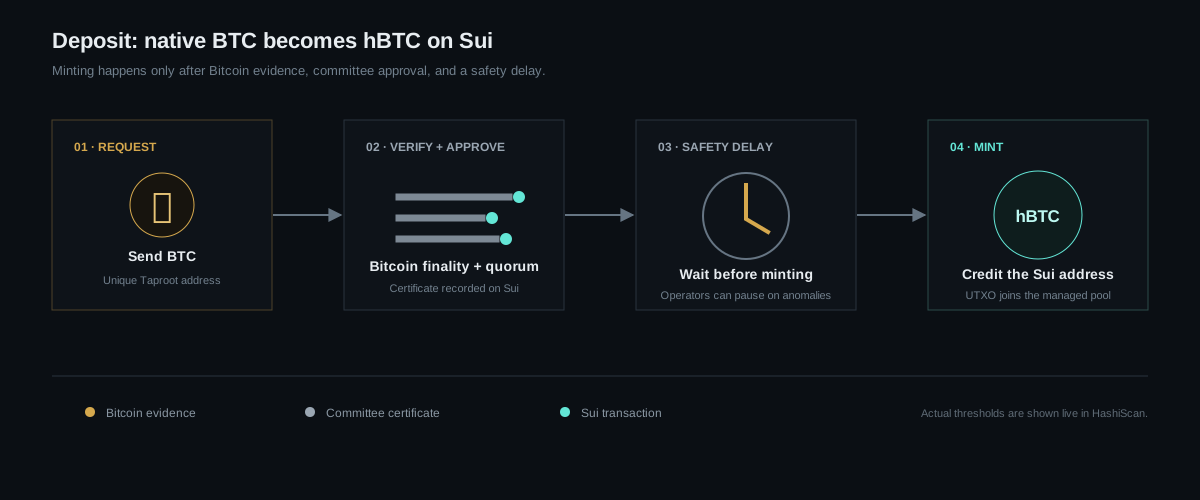
The live confirmation threshold, minimum amount, and safety delay are configuration values—not assumptions made by this diagram.
Send and request.A Sui address derives a unique Taproot deposit address. The user sends BTC there and records the Bitcoin UTXO in a Sui deposit request.
Verify and approve.Committee members wait for enough Bitcoin confirmations, perform their checks, and produce a quorum certificate.
Wait through the safety delay.Approval and minting are deliberately separated. Operators can pause the service if an approval looks faulty.
Mint hBTC.The contract re-checks the certificate and delay, mints hBTC, and adds the deposited UTXO to the managed pool.
03
How a withdrawal works
How hBTC is redeemed for native BTC.
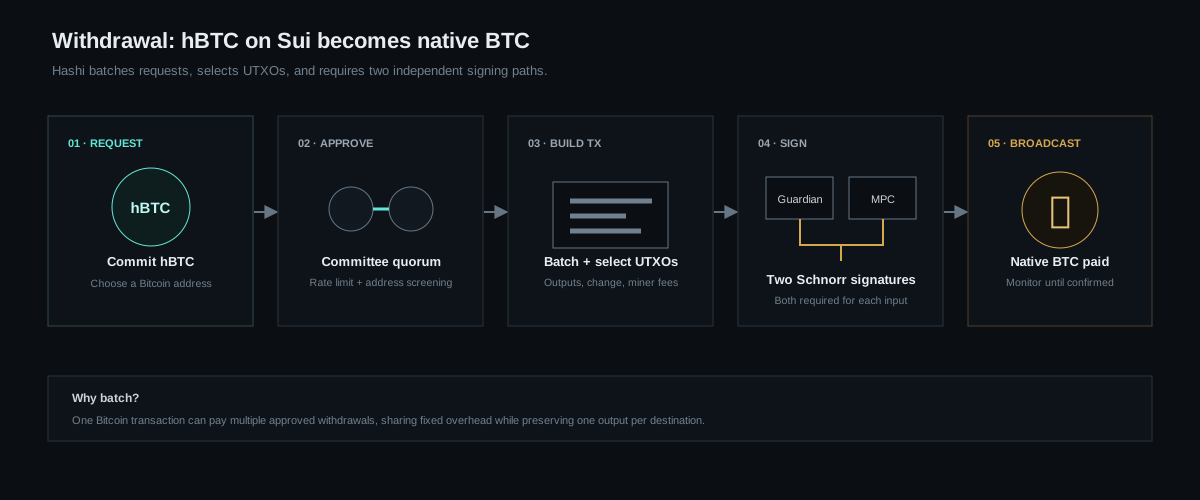
Approved requests can share one Bitcoin transaction. Each request still receives its own destination output.
Request BTC.The user submits hBTC and a Bitcoin destination address to the Sui contract.
Approve the request.The protocol checks rate limits and the destination; a committee quorum certifies the request.
Build a Bitcoin transaction.A leader may batch approved requests, select pool UTXOs, calculate fees, outputs, and change, then commit the unsigned transaction on Sui.
Sign through two paths.The Guardian and threshold MPC committee each produce the required Schnorr signatures.
Broadcast and confirm.The signed transaction is sent to Bitcoin and monitored until it reaches the configured confirmation threshold.
04
How to read HashiScan
Use the explorer as an evidence map, not as a wallet.
1
Search an identifier
Paste a Sui transaction digest, Bitcoin txid, Hashi request ID, or Sui address.
2
Read the current phase
The timeline separates completed, current, pending, attention, and unknown states.
3
Open the evidence
Follow the external Bitcoin and Sui explorer links. Each live fact includes its source and observation time.
 HashiScanTESTNET